
I've sat through too many board presentations where the CISO spent twenty minutes explaining firewall configurations and SIEM alert volumes to directors who needed to know something entirely different: whether the organization can operate safely, what the exposure looks like in business terms, and where investment is needed. The gap between what security teams report and what boards need to hear wastes everyone's time and leaves directors unable to fulfill their fiduciary duty.
Board cyber reporting isn't about dumbing down technical content. It's about translating security posture into the business context directors operate in daily. They make resource allocation decisions, assess enterprise risk, and answer to shareholders or taxpayers. Your job is to give them what they need to do theirs.
What Makes Board Reporting Different From Executive Reporting
The reports you give your CEO or CFO aren't the same reports your board needs. I see CISOs make this mistake constantly—taking the monthly executive summary, adding a cover slide, and calling it board-ready. The audiences have fundamentally different responsibilities.
Your CEO needs operational visibility with enough detail to make tactical decisions. The board needs strategic oversight with enough context to understand whether management is handling risk appropriately. That distinction changes everything about how you structure board cyber reporting.
Directors typically aren't technical, though some may have operational backgrounds. More importantly, they're evaluating risk across the entire enterprise. Cyber is one domain among many competing for attention and resources. Your fifteen minutes at a quarterly meeting sits between discussions of market positioning, regulatory exposure, and succession planning. You're not educating them on security—you're informing their governance role.
The pattern I see in effective board reporting: tight business framing, clear risk statements, specific asks. The pattern I see in ineffective reporting: technical detail, process descriptions, and reassurances that everything is under control. Directors don't need reassurance. They need enough information to ask good questions and fulfill oversight responsibilities.
The Five Elements Every Board Cyber Report Needs
Strip away everything decorative and you're left with five components that matter. These aren't arbitrary categories—they map directly to how boards think about risk and governance.
Current Security Posture in Business Terms
Start with where you are. Not the number of endpoints protected or security tools deployed, but the actual state of your defensive position expressed in terms directors understand.
A healthcare CISO might say: "We can detect and respond to ransomware attacks against clinical systems within four hours, meeting our recovery time objective for patient care operations. Our exposure to data breach from third-party vendors remains our highest residual risk, affecting approximately 40% of patient records processed through external billing and scheduling platforms."
A defense contractor might frame it: "Our CUI protection capabilities currently meet 85% of CMMC Level 2 requirements. The remaining gaps, primarily in incident response documentation and supply chain verification, represent moderate risk to our JPEO contract recompete scheduled for Q3."
Notice what's absent: acronyms without context, tool names, technical metrics that require translation. Notice what's present: operational capability, business impact, specific exposure. If you're working toward stronger regulatory compliance posture, frame it in terms of program maturity and regulatory risk, not control counts.
Changes Since Last Report
Boards operate in delta. They need to know what's different, what's better, what's worse. A static security posture in a dynamic threat environment is itself a change worth reporting.
This section should be short. Three to five bullets covering material changes in risk profile, capability, or threat landscape. The cloud migration that expanded your attack surface. The enhanced monitoring that reduced your detection time. The key security architect who left, creating knowledge concentration risk.
What doesn't belong here: routine operational activities, scheduled patching, training completions unless they materially changed risk. Directors don't need progress reports on business as usual.
Material Risks and Exposure
This is the heart of board cyber reporting and where most CISOs either over-explain or under-communicate. You're not presenting a risk register. You're highlighting the risks that matter at board level—those that could affect the organization's mission, finances, reputation, or regulatory standing in meaningful ways.
I use a three-tier approach. Tier one risks could stop core business operations or create material financial impact. Tier two risks could damage competitive position or create regulatory consequences. Tier three risks are worth monitoring but don't rise to board attention except in aggregate.
For each material risk, state the exposure, the probability as you honestly assess it, and what's in place to manage it. "Our legacy claims processing system handles 60% of transaction volume and cannot be segmented from the internet-facing portal. A ransomware attack against this system would halt claims processing for an estimated 5-7 days based on our recovery capabilities. We've implemented enhanced monitoring and backup procedures, but the fundamental architectural risk persists until the replacement system deploys in Q4 2025."
That paragraph tells a director what they need to know. The business function at risk, the exposure window, the mitigation timeline, and why this isn't solved yet. They can now ask informed questions about accelerating the replacement project, accepting the interim risk, or exploring additional mitigations.
Incidents and Near-Misses Worth Noting
Report what happened that directors need to know about. Material incidents obviously belong here, but so do near-misses that exposed systemic weaknesses or revealed gaps in assumptions.
The phishing attack that bypassed email filters and reached executives might not have succeeded, but it revealed that your assumed control wasn't working as designed. The vulnerability in a third-party platform that could have exposed customer data if your monitoring hadn't caught it shows both capability and dependency risk.
Don't bury incidents in passive voice and technical detail. "On March 15, an employee's compromised credentials were used to access financial records. We detected the unauthorized access within 90 minutes through our enhanced monitoring, contained the incident, and verified no data left the network. We're implementing mandatory MFA for financial system access by April 30." That's the level—what happened, how you responded, what you're doing about it.
Pattern matters more than individual events unless the event was material. If you're seeing an uptick in sophisticated social engineering or supply chain compromise attempts, that trend information helps directors understand the evolving threat landscape affecting your sector.
Resource Needs and Strategic Decisions
Directors allocate resources and approve strategic direction. If you need something from them, this is where it belongs. Not a laundry list of nice-to-haves, but the specific investments or decisions required to address material risks or meet regulatory obligations.
"The proposed $400K investment in SIEM enhancement would reduce our detection time for lateral movement from days to hours, addressing the gap identified in our last tabletop exercise. This directly mitigates our highest-rated risk—undetected attacker persistence in the environment."
Or: "We need board direction on our approach to AI tool usage. Staff are already using consumer AI platforms for work tasks. We can build governed infrastructure for approved use cases or enforce blanket prohibition. Each approach has different risk profiles and cost implications outlined in the appendix."
That second example illustrates an underutilized aspect of board cyber reporting—asking for strategic guidance on technology governance questions that aren't purely security decisions. Directors can provide valuable perspective on risk tolerance, competitive positioning, and organizational culture that should inform your security strategy.
Need to Brief Your Board on Cybersecurity?
Carl works with boards and executive teams to translate complex security and compliance challenges into clear business context. His keynotes and workshops help directors understand their cyber oversight responsibilities and ask the right questions.
Book Carl to Speak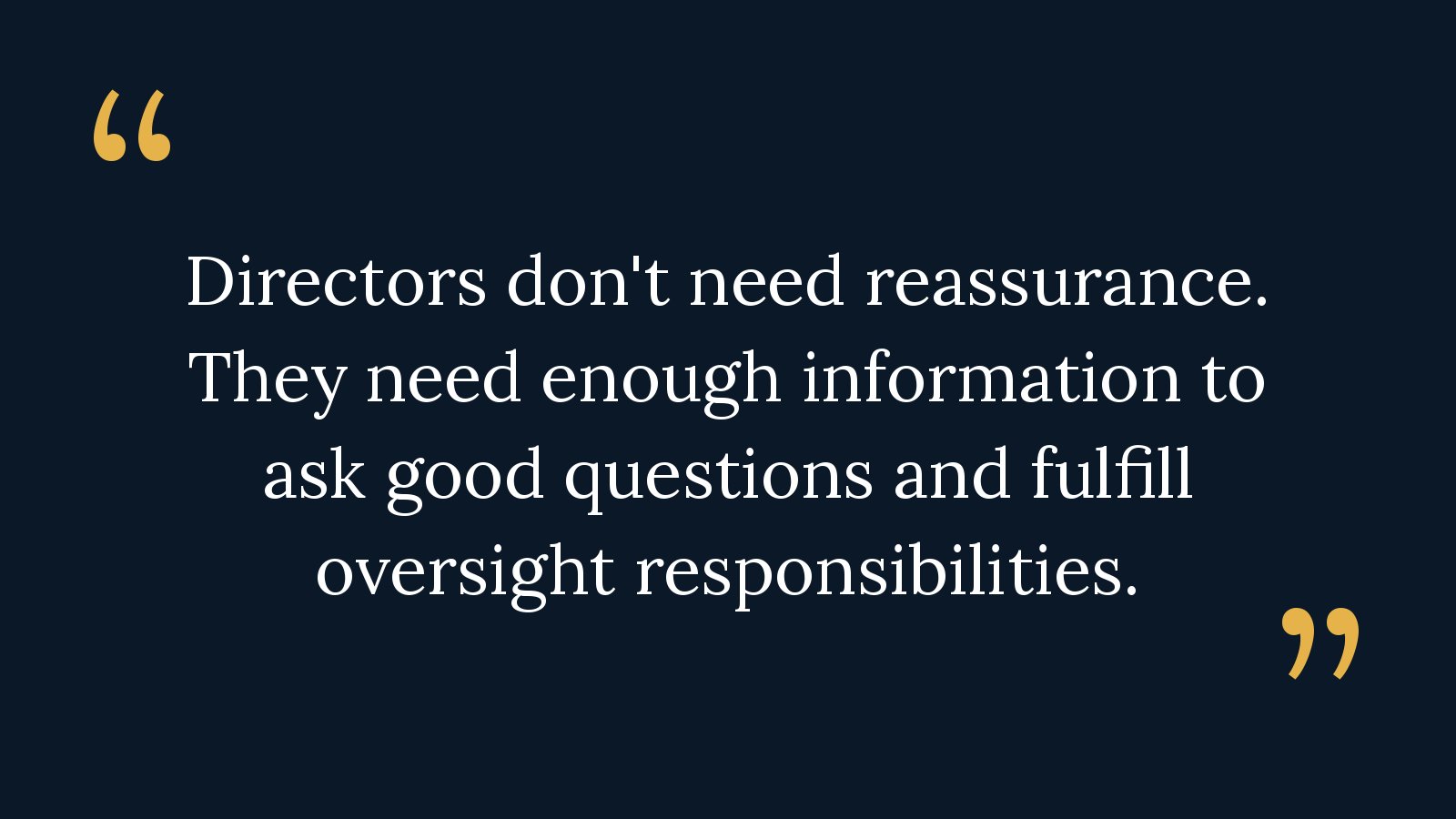
Metrics That Actually Mean Something to Directors
The metrics problem in board cyber reporting is real. Security teams measure what's measurable—vulnerabilities patched, phishing simulation results, log entries analyzed. Boards need metrics that indicate capability, capacity, and risk trajectory.
I've seen board reports with twenty metrics presented as KPIs when maybe three actually mattered. More metrics don't create better governance. They create information overload and diffuse focus from what's material.
Useful board-level metrics answer specific questions: Can we detect attacks? Can we respond effectively? Are we meeting regulatory requirements? Is our risk position improving or degrading? How do we compare to relevant peers?
Mean time to detect and mean time to respond tell directors about capability. These metrics translate directly to potential breach impact—how long an attacker can operate undetected determines how much damage they can cause. Track these quarterly and report trends. If MTTD is increasing, that's a capacity problem worth board discussion.
Percentage of critical systems with backup and tested recovery procedures addresses resilience. Directors understand business continuity in a way they might not understand security architecture. This metric connects to their existing mental model of operational risk.
Third-party security assessment completion rates matter because supply chain risk sits squarely in board territory. "We've assessed 65% of vendors with access to sensitive data, up from 40% last quarter" tells directors you're making progress on a risk they recognize.
For regulated industries, compliance metric selection depends on your frameworks. A healthcare CISO tracks things like encryption coverage for PHI, access audit completion rates, and business associate agreement status because those map to HIPAA enforcement actions directors want to avoid. A defense contractor tracks CUI boundary effectiveness and CMMC gap closure because those affect contract eligibility.
What doesn't belong in board metrics: vanity numbers that look good but indicate little (number of security awareness training completions), operational metrics better suited for management review (firewall rule changes, help desk tickets), or technical measures that require extensive translation (vulnerability scan results by CVSS score).
The best board metric structure I've used: three standing metrics that track quarter over quarter, plus two to three contextual metrics specific to current strategic priorities or known risks. This gives continuity for trend analysis while allowing focus on what matters now.
Common Failures in Board Cyber Reporting
The mistakes I see aren't random—they follow predictable patterns that reveal how CISOs misunderstand the board's role or their own communication responsibility.
Too Much Technical Detail
This is the classic error. Twenty slides explaining zero-trust architecture implementation when the board question is "Does this improve our security position and by how much?" Technical detail signals that you either don't understand your audience or can't translate your work into business impact.
Directors who want more technical depth will ask. Your baseline presentation should assume intelligent non-technical audience and let them pull you deeper into specifics if they choose. I've never had a board complain that my initial presentation wasn't technical enough. I've heard plenty of feedback that previous CISOs were impossible to understand.
No Clear Ask
You're taking up board meeting time. That time should produce something—a decision, an approval, a strategic direction, or at minimum, informed oversight. Reports that present information but require no action or input waste the board's most limited resource.
If you genuinely need nothing from the board and have no material changes to report, you might not need to present. An executive summary in the board packet could suffice. Don't present just because cyber is on the agenda.
Everything Is Fine Reassurance
Security leaders sometimes approach board reporting as reputation management rather than governance support. The report becomes a demonstration of competence rather than an honest assessment of position. This fails everyone.
Boards know cyber risk is real and persistent. They know you face resource constraints and evolving threats. A report that suggests everything is under control and no significant risks exist doesn't reassure them—it makes them question whether you understand the environment or are being straight with them.
The board's job includes evaluating whether the CISO is effective. Honest risk reporting that acknowledges gaps and explains how you're managing them demonstrates competence far better than painting everything green.
Jargon Without Translation
Every field has specialized language. Security has more than most. EDR, SIEM, SOAR, XDR, CASB—the acronyms proliferate faster than anyone can track. Using insider terminology without definition or context excludes your audience from understanding.
This doesn't mean avoiding technical terms entirely. Sometimes precision requires specific language. But when you use a specialized term, either define it in context or explain what it means functionally. "Our endpoint detection and response platform—the security software on every laptop and server—now includes behavioral analysis that can identify ransomware by how it acts, not just by signature matching."
That sentence teaches nothing condescending but makes sure everyone follows. Directors don't need to become security experts. They need to understand what you're telling them well enough to perform oversight.
Wrong Comparison Set
Security maturity benchmarking can provide useful context, but only if you're comparing against relevant peers. A regional hospital compared to Fortune 500 financial services firms will always look underdeveloped. That comparison adds nothing useful.
If you include benchmarking data, make sure it reflects similar organizations—same sector, similar size, comparable regulatory environment. And be clear about what benchmarking can and cannot tell you. "We score in the 60th percentile for healthcare organizations under $500M in revenue" gives directors context. It doesn't tell them whether that's adequate for your specific risk profile and business model.
How to Structure the Report Itself
Format matters less than content, but structure affects whether directors absorb what you're communicating. The board cyber reporting format I've found most effective runs three to five pages maximum including any visualizations.
Start with executive summary—half a page, three to four bullets that capture the essence. Current posture in one sentence. Highest material risks in one or two bullets. Key ask if you have one. This section serves directors who review the board packet before the meeting and need the gist quickly.
Follow with the five core elements described earlier, one to two pages total. Use section headers that match board thinking: Security Posture, Risk Exposure, Recent Incidents, Resource Requirements. Don't get creative with structure. Clear and conventional beats novel and confusing.
Support with metrics page—one page, five to eight key metrics presented simply. A line chart showing MTTD trend over four quarters tells a story. A table with twenty rows of numbers tells nothing. Visualizations should communicate, not decorate.
Close with any appendices needed—detailed risk register, compliance framework status, vendor assessment results, budget breakdown. These support deeper discussion if the board wants to pull threads, but they don't belong in the main presentation. A director interested in third-party risk details can flip to the appendix. Everyone else isn't forced through information they don't need.
For verbal presentations, fifteen minutes maximum for initial remarks. That timing forces discipline and respects that questions matter more than your prepared content. The discussion following your presentation often provides more value than the presentation itself—directors surfacing concerns, testing assumptions, offering perspective on risk tolerance or strategic priority.
Your goal isn't to prevent questions. It's to equip directors to ask good ones. The questions every CISO should be asking the CEO mirror what boards should ask CISOs—they're about strategic alignment, resource adequacy, and whether security enables or hinders the organization's mission.
Looking for Board-Level Cybersecurity Guidance?
Carl delivers keynotes and workshops tailored to boards, executives, and leadership teams navigating cybersecurity governance and regulatory compliance. See all keynote speaking topics or reach out about your event.
Book Carl for Your EventAdapting Reporting to Your Board's Maturity
Not all boards start with the same level of cyber literacy or engagement. The reporting approach that works for a board with security committee and technical directors won't work for a board where cyber is unfamiliar territory.
A board new to cyber oversight needs more context and education woven into reporting. You're still not teaching a security course, but you're establishing the mental models directors need to evaluate information you're providing. This might mean spending more time on threat landscape and industry patterns early in the relationship, gradually shifting toward more organization-specific risk discussion as the board develops baseline understanding.
I worked with a small hospital board where cyber was new territory for every director. The first year of reporting included a short educational component in each quarterly update—one topic per meeting covering basics like ransomware mechanics, HIPAA breach consequences, or medical device security challenges. By year two, directors asked sophisticated questions about third-party risk and business continuity that they couldn't have formulated initially.
That educational element never patronized and never replaced actual risk reporting. It supplemented board cyber reporting to build capacity for more effective governance. Once the board demonstrated that capacity, we dropped the education pieces and focused entirely on oversight needs.
A mature, engaged board wants you to skip the basics and get to material risk discussion faster. They'll ask pointed questions about your assumptions, challenge your prioritization, and potentially push back on resource requests if they see the business case as weak. This is exactly what good governance looks like.
With a mature board, you can present risk scenarios, discuss strategic options, and get meaningful input on decisions that blend business strategy and security posture. "If we move our primary application to cloud infrastructure, we reduce technical debt and operational overhead but increase dependence on a single cloud provider's security controls. Here are the risk tradeoffs as I see them." That conversation produces better decisions than you'd make alone.
The wrong move is presenting to board maturity you wish you had rather than the board you're actually addressing. Read the room. Notice what questions directors ask and what seems to resonate. Adjust your approach accordingly. Board reporting should evolve as the board's capacity for oversight develops.
The Audit Committee Relationship
In larger organizations, cyber reporting often flows through the audit committee rather than to the full board. This changes the dynamic because audit committee members typically dig deeper and meet more frequently.
Audit committee reporting can sustain more detail than full board reporting. Committee members expect to spend time on risk assessment methodology, control effectiveness evidence, and compliance program mechanics. They're performing more intensive oversight on behalf of the full board.
The pattern that works: detailed reporting to audit committee quarterly, summary reporting to full board semi-annually or when material issues arise. The audit committee chair then reports to the full board on cyber risk as part of overall committee updates, with you available to answer questions if needed.
This structure prevents overloading the full board agenda while ensuring appropriate governance oversight. It does mean you're managing two reporting relationships with different expectations. Your audit committee presentation might run thirty minutes with extensive discussion. Your full board update when it happens needs to compress that content into fifteen minutes of highest-level material.
The audit committee relationship also affects how you handle incidents. Material incidents go to the full board. Lesser incidents might go to audit committee only. Work with your general counsel and CFO to establish clear thresholds for what rises to full board attention. You want consistency in materiality judgment across all risk domains, not special rules for cyber.
When Board Reporting Drives Better Security
The discipline of board cyber reporting improves your security program if you let it. Preparing to explain your posture and risk profile to directors forces clarity about what matters and what's noise.
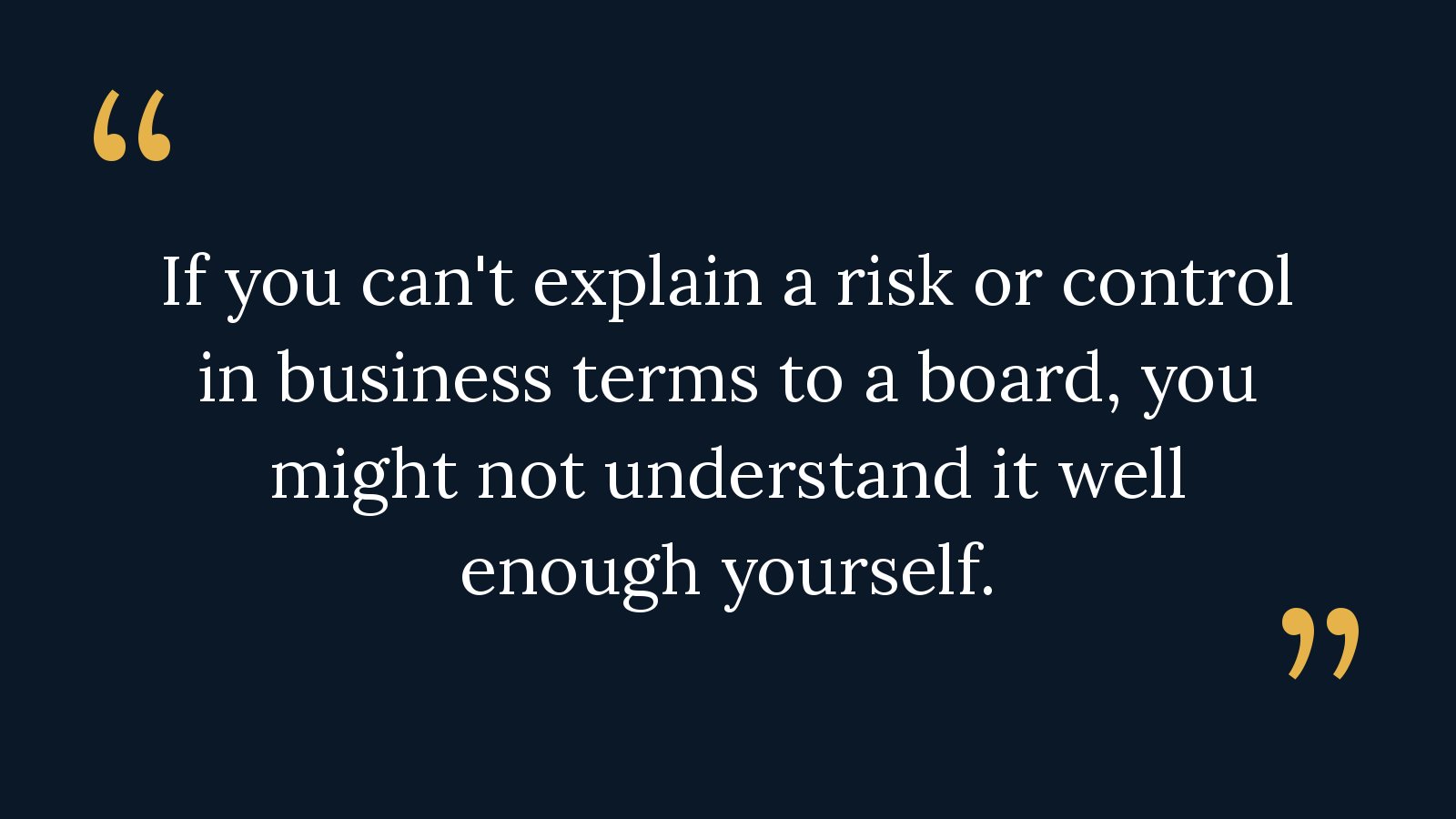
If you can't explain a risk or control in business terms to a board, you might not understand it well enough yourself. The translation exercise strips away technical comfort language and reveals whether you're addressing actual risk or performing security theater.
Board reporting also creates accountability for follow-through. When you tell directors in Q1 that you'll implement MFA for financial systems by Q2, you've created a commitment that shows up in Q2 reporting. That accountability mechanism helps security compete for resources and attention with other priorities.
The questions directors ask—sometimes the naive ones—surface assumptions you hadn't examined. "Why do we allow any remote access to that system if it's so critical?" Sometimes there's a good answer. Sometimes the answer is "because that's how we've always done it" and the question triggers useful reconsideration.
Directors bring perspective from other organizations, sectors, and risk domains. A director who serves on multiple boards might say "The approach we're taking at another company I work with involves..." and introduce an option you hadn't considered. You're not bound by their suggestions, but the cross-pollination creates value.
Effective board cyber reporting also builds the political capital you need when something goes wrong. Directors who've received honest, clear risk reporting understand that breaches happen even to well-defended organizations. They're prepared to support appropriate incident response rather than reflexively demanding heads roll. The trust you build through consistent, truthful reporting pays dividends when you need it most.
The Strategic Implications
Board cyber reporting sits at the intersection of security practice, risk governance, and organizational leadership. Get it right and you're not just fulfilling a compliance obligation—you're enabling better decisions about the tradeoffs every organization makes between security, functionality, and cost.
Directors who understand your security posture can approve strategies that appropriately balance risk and opportunity. They can explain to shareholders or oversight bodies why the organization made certain security investments and accepted certain residual risks. They can evaluate whether you're the right security leader for the organization's needs and provide the support required for you to succeed.
This governance function matters more as cyber risk touches every aspect of organizational strategy. The board deciding on cloud migration, acquisition targets, new market entry, or major technology investments needs to understand security implications. Your ability to communicate those implications in board-relevant terms directly affects whether the organization makes good decisions.
The pattern I've observed: organizations with strong board cyber reporting tend to have more mature security programs, more realistic risk management, and better outcomes when incidents occur. The reporting itself doesn't create security, but it reflects and reinforces a culture where security is genuinely integrated into business strategy rather than bolted on afterward.
Your board reporting becomes a test of whether security leadership is working at your organization. If you can't get time on the agenda, if directors seem disengaged, if your recommendations consistently go unfunded—those are symptoms of deeper problems in how security connects to organizational governance. The reporting issues are effects, not causes, but they reveal gaps that need addressing.
Conversely, when directors engage meaningfully with cyber risk, ask substantive questions, provide useful guidance, and approve appropriate resources, you're seeing evidence that security has found its proper place in organizational decision-making. That's what success looks like at the governance level, and effective board cyber reporting is how you demonstrate and maintain it.